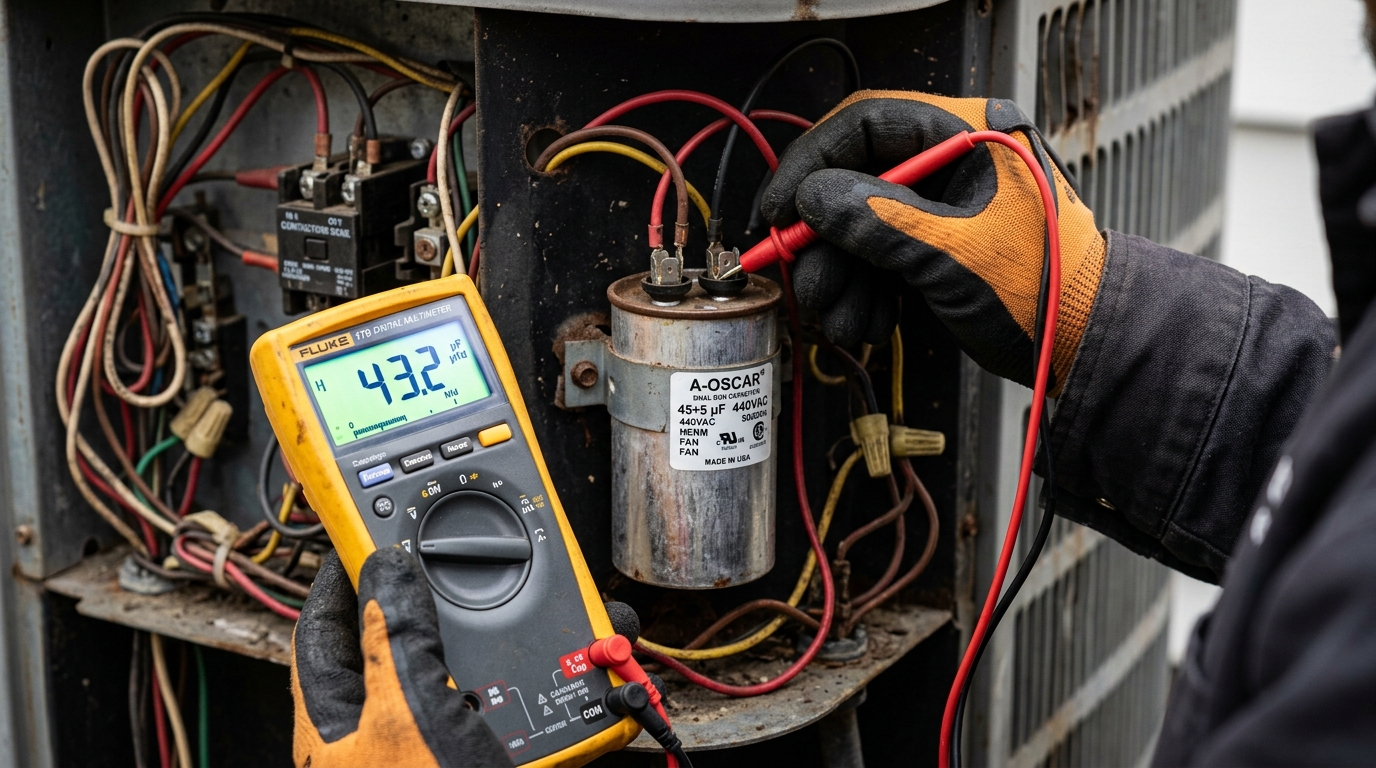
Technical guide to testing HVAC dual run capacitors using digital multimeters. Learn microfarad tolerance limits, discharge safety, and HERM terminal testing.
Explore in-depth technical guides authored by certified HVAC practitioners and mechanical engineers. Learn precise thermodynamic subcooling calculations, dual run capacitor multimeter testing procedures, heat exchanger combustion analysis, and commercial rooftop equipment maintenance standards.
Review rigorous step-by-step diagnostic methodologies used by EPA Section 608 certified technicians on active emergency service calls. Each article provides concrete formulas, manufacturer tolerances, and safety instructions for residential and commercial heating and cooling equipment.
Modern heating, ventilation, and air conditioning equipment incorporates sophisticated electronic controls, modulating compressors, and microprocessor boards requiring precision testing instruments. Field technicians do not guess component failures.
Instead, certified technicians apply rigorous scientific principles, measuring electrical potentials, refrigerant pressures, and temperature differentials to identify mechanical breakdowns with definitive mathematical accuracy.
Technical guide to testing HVAC dual run capacitors using digital multimeters. Learn microfarad tolerance limits, discharge safety, and HERM terminal testing.
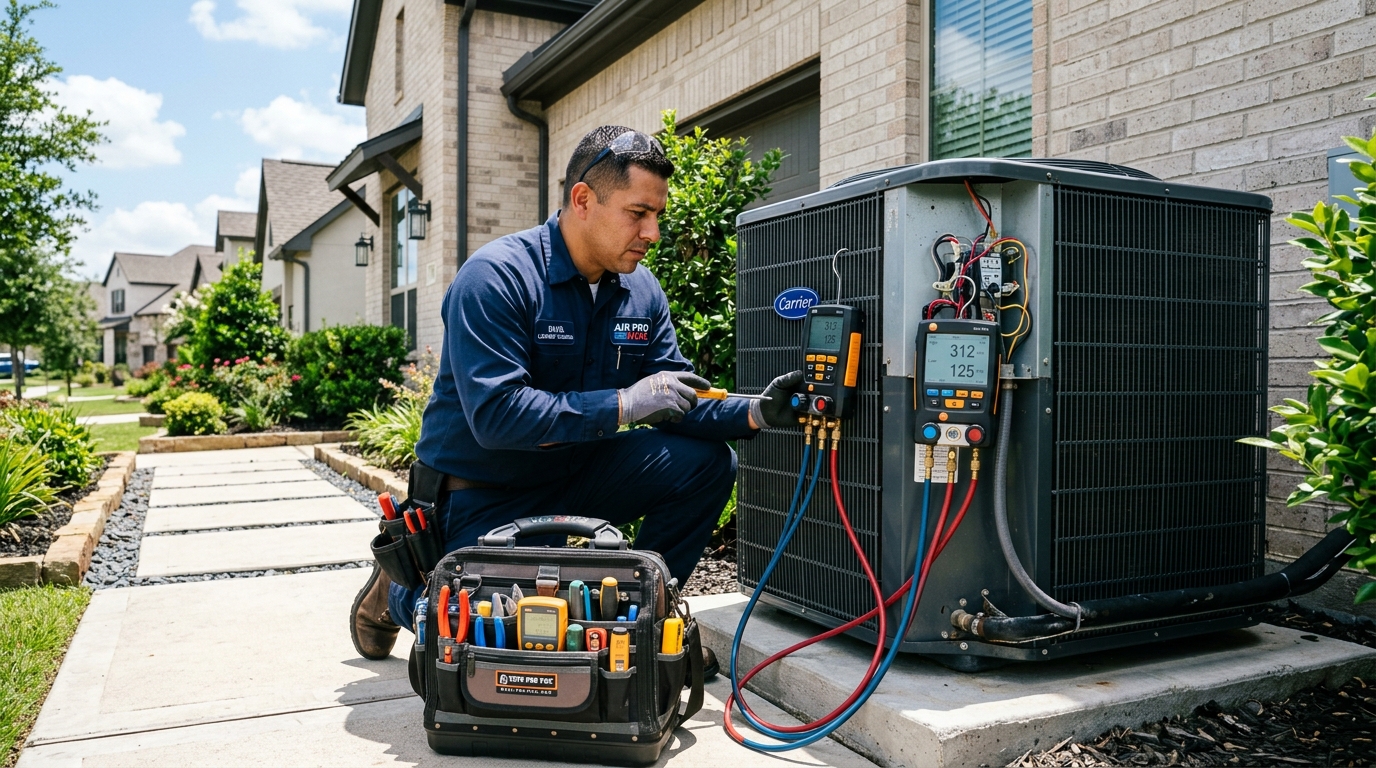
Master thermodynamic refrigerant diagnostics. Learn how to calculate liquid subcooling and suction superheat to diagnose TXV restrictions and refrigerant leaks.
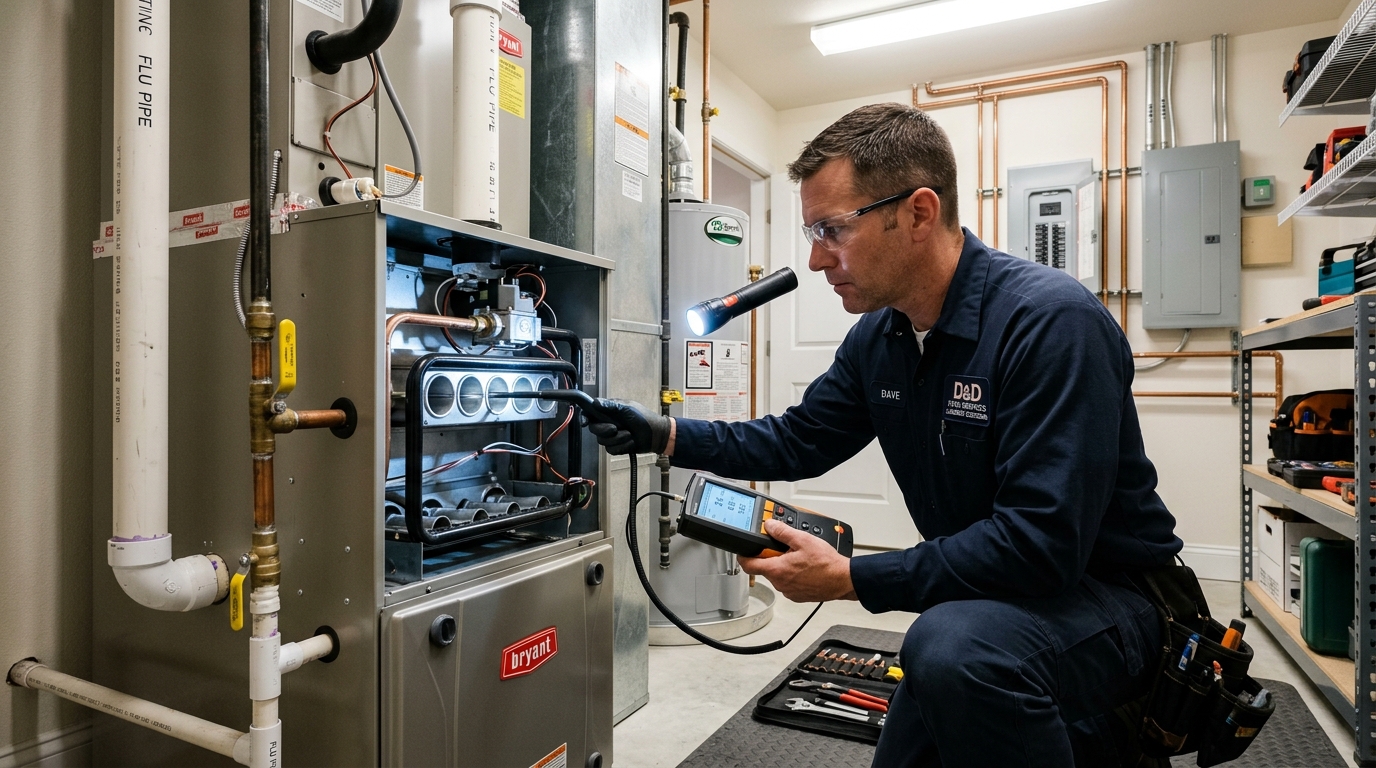
Learn how technicians detect cracked furnace heat exchangers, carbon monoxide leakage risks, optical fiber-optic inspection procedures, and habitability rules.

Comprehensive commercial packaged rooftop unit (RTU) preventive maintenance guide. 10-point checklist covering economizers, belt tension, and 3-phase power.
Accurate diagnostics require calibrated digital testing tools engineered for harsh field operating conditions. Technicians deploy True-RMS digital multimeters, digital manifold gauges with micron sensors, combustion gas analyzers, and fiber-optic boroscopes to detect micro-faults before total component failure occurs.
Analog testing instruments lack the precision needed to evaluate modern inverter-driven compressors and variable-speed ECM blower motors. Digital instruments provide real-time data logging and calculation features that eliminate human measurement errors.
The table compiled below summarizes the primary diagnostic instruments deployed during emergency service calls, along with their core measurement functions and standard manufacturer tolerance ranges.
| Diagnostic Tool | Measurement Function | Target Tolerance Range | Critical Failure Threshold |
|---|---|---|---|
| True-RMS Multimeter | Capacitance & Motor Amperage | ±6% of Nameplate µF | > 6% Deviation from Label µF |
| Digital Manifold Gauges | Subcooling & Superheat Calculation | 10°F - 14°F Subcooling (TXV) | < 5°F Subcooling (Refrigerant Leak) |
| Combustion Gas Analyzer | Flue CO & Burner Efficiency | < 50 PPM Undiluted Flue CO | > 400 PPM CO (Hazardous Breach) |
| Digital Micron Gauge | Deep Vacuum Decay Evaluation | < 500 Microns Standing Decay | > 1,000 Microns (System Moisture/Leak) |
Professional HVAC emergency service depends on rapid mobile response vehicles stocked with factory-authorized universal replacement components. Mobile inventory management ensures technicians restore heating and cooling on the initial visit without delays for warehouse parts orders.
Emergency response vans carry dual run capacitors spanning thirty-five to eighty microfarads, single-pole and two-pole thirty-amp contactors, multi-tap transformers, and universal silicon nitride ignitors.
Implementing structured seasonal maintenance before summer heatwaves and winter freeze events reduces emergency breakdown rates by up to seventy percent. Regular chemical coil cleaning, electrical terminal tightening, and static pressure balancing extend total equipment operational lifespan significantly.
Spring cooling inspections evaluate outdoor condenser fin cleanliness, contactor points for electrical pitting, and capacitor microfarad health before high ambient heat strikes.
Technicians also verify condensate drain pitch, clean secondary float switches, and install antimicrobial pan treatment tablets during spring visits to protect residential ceiling drywall from summer overflow disasters.
Autumn heating inspections focus on burner combustion analysis, flue draft pressure switches, flame rectification sensors, and heat exchanger crack detection to guarantee family life safety.
Review common homeowner and commercial facility manager questions regarding emergency diagnostic evaluations, technician qualifications, and service fees. Understanding diagnostic procedures helps property owners make informed decisions when equipment malfunctions unexpectedly.
Certified emergency technicians maintain EPA Section 608 Universal certifications for refrigerant handling, NATE certifications for heat pumps and gas combustion, and state journeyman mechanical licensing to ensure all emergency troubleshooting satisfies local municipal building codes.
Field technicians participate in continuous manufacturer training programs covering Carrier, Trane, Lennox, York, and Rheem equipment. Rigorous training ensures technicians service modulating variable-capacity systems correctly.
Mobile service vans maintain rolling stock inventories containing universal dual run capacitors, contactors, silicon nitride ignitors, transformers, and R-410A refrigerant, arriving on-site within fifteen to thirty minutes across all active metropolitan service territories.
Vans carry specialized digital test equipment to diagnose mechanical breakdowns on the spot. Technicians initiate repairs immediately upon homeowner approval, restoring heating and cooling on the first visit.
Standard diagnostic evaluations carry a flat eighty-nine dollar service fee covering multi-point electrical, thermodynamic, and mechanical testing. When property owners approve the written physical repair estimate, the diagnostic fee is credited directly toward completed repair costs.
Property owners receive a transparent written breakdown before any mechanical work begins. Flat-rate pricing guarantees zero surprise charges or hidden travel fees regardless of arrival time.
Our licensed 24/7 emergency technician dispatch network arrives in mobile service vans within 15 to 30 minutes, carrying factory-authorized universal parts to restore heating and cooling on the first visit.