Cracked Heat Exchangers: Carbon Monoxide Safety & Emergency Furnace Shutdown
A cracked furnace heat exchanger allows toxic combustion byproducts including carbon monoxide, nitrogen dioxide, and sulfur dioxide to breach the combustion barrier and contaminate breathable household air.
Technicians deploy fiber-optic cameras, digital combustion gas analyzers, and static pressure differential meters to identify hairline fractures and ensure family safety.
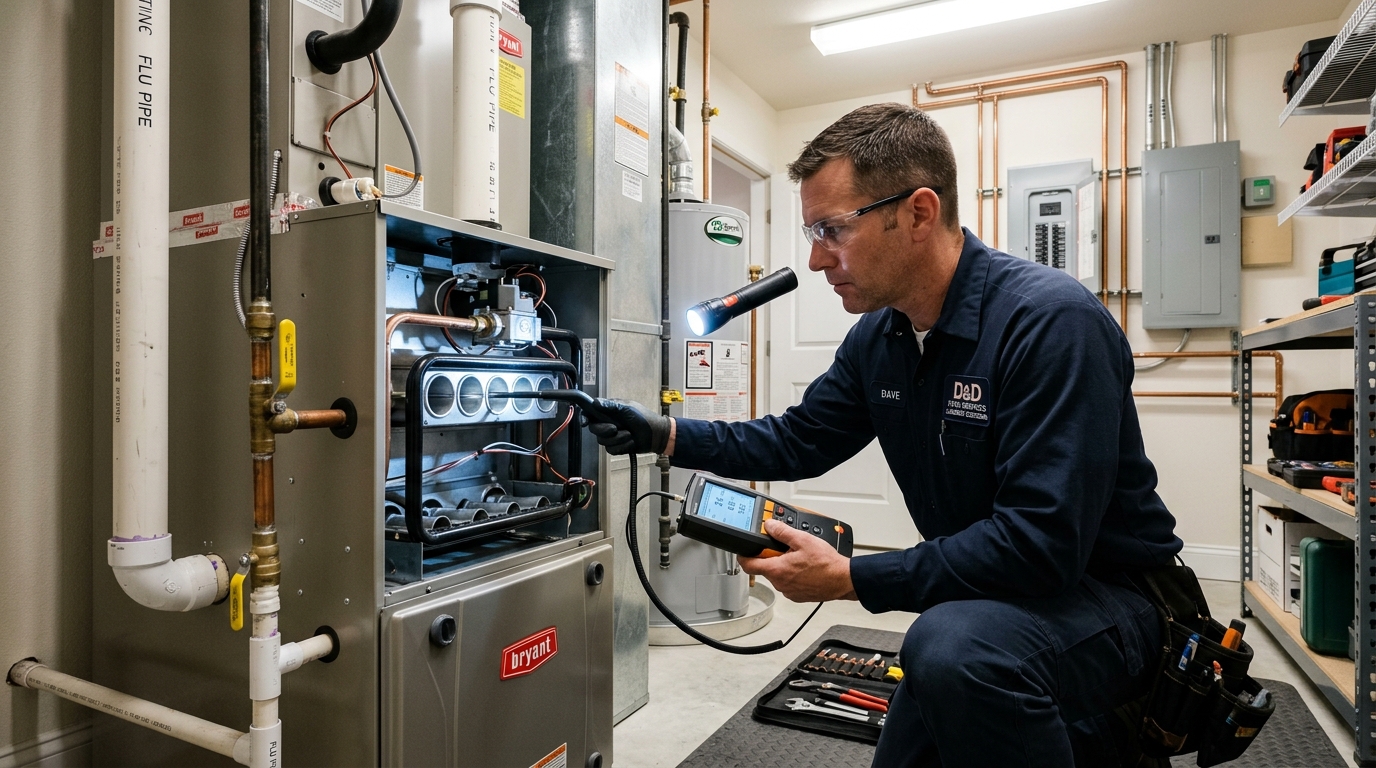
Diagnostic evaluation and precision measurement of heating and cooling components.
Mechanical Causes of Residential Heat Exchanger Fractures
Heat exchangers endure immense thermal stress during repetitive expansion and contraction cycles over decades of winter operation. Restricted return airflow caused by dirty MERV filters causes furnace internal plenum temperatures to exceed 180 degrees Fahrenheit, accelerating metal fatigue and clamshell seam cracking.
Over-fired gas burners and undersized supply ductwork create localized hot spots that weaken 20-gauge aluminized steel cells, leading to catastrophic hairline fatigue cracks.
Condensing high-efficiency furnaces produce acidic condensate with pH levels between 3.0 and 4.5. If internal secondary heat exchanger coils experience condensate drain blockages, standing acidic water rapidly corrodes stainless steel welds.
Short-cycling caused by oversized furnace equipment forces heat exchangers to heat up and cool down prematurely hundreds of times daily. Repetitive thermal shock fractures clamshell rivets and creates wide expansion gaps.
Visual & Optical Boroscope Diagnostic Inspection Procedures
Certified heating technicians remove primary burner tubes and high-limit switches to insert high-resolution 360-degree fiber-optic boroscope inspection cameras directly into interior heat cells. Optical magnification reveals microscopic cracks, separated crimped seams, and severe rust flaking on interior metal walls.
Technicians also observe the main burner flame pattern when the indoor blower motor engages. Any flickering, flame rollout, or color changes from crisp blue to ragged yellow confirm airflow cross-contamination through a ruptured heat exchanger.
A cracked cell allows high-pressure supply air from the circulation blower to enter the low-pressure combustion chamber. This air turbulence disrupts the burner draft, causing erratic flame pulsation and burner ignition delays.
Photographic evidence collected through high-definition boroscope cameras provides homeowners with clear documentation of structural fractures before recommending complete heating unit replacements.
Combustion Gas Analysis & Flue Gas Benchmarks
Deploying a calibrated digital combustion analyzer into the furnace flue pipe provides definitive data on burner efficiency, excess air percentages, and carbon monoxide concentrations. Flue gas carbon monoxide levels exceeding 400 parts per million undiluted indicate hazardous incomplete combustion.
Technicians also sample ambient air at the indoor supply registers while the furnace operates under full load. Any detectable carbon monoxide reading above 0 parts per million at the living area supply registers demands an emergency shutdown.
Review the combustion analysis safety benchmarks compiled below to understand the operational standards governing certified gas heating equipment.
| Sampling Location | Normal Safe Range | Warning Action Level | Hazardous Emergency Level |
|---|---|---|---|
| Living Space Air | 0 PPM | 1 - 9 PPM (Investigate) | > 10 PPM (Immediate Evacuation) |
| Supply Register Outlet | 0 PPM | 1 - 5 PPM (Shut Down) | > 5 PPM (Red Tag Furnace) |
| Flue Pipe Gas (Undiluted CO) | < 50 PPM | 100 - 399 PPM (Tune Burners) | > 400 PPM (Hazardous Breach) |
| Plenum Temperature Rise | 35°F - 65°F | 70°F - 85°F (High Limit Warning) | > 90°F (Severe Airflow Blockage) |
Carbon Monoxide Toxicology & Physiological Danger
Carbon monoxide is a colorless, odorless, and tasteless toxic gas that bonds with human hemoglobin over 200 times more aggressively than oxygen. Inhaling low concentrations over several hours produces carboxyhemoglobin in the bloodstream, starving vital organs of oxygen.
Early symptoms of carbon monoxide poisoning resemble common winter influenza, including persistent headaches, nausea, dizziness, fatigue, and mental confusion.
High concentrations exceeding 400 parts per million cause rapid loss of consciousness, permanent neurological damage, and fatal asphyxiation within two to three hours of continuous exposure.
Standard consumer plug-in carbon monoxide alarms do not sound until concentrations reach 70 parts per million for over an hour. Low-level digital monitors that alert at 10 parts per million offer superior safety for infants and elderly residents.
Statutory Safety Codes & Legal Red-Tagging Mandates
State mechanical safety statutes, NFPA 54 National Fuel Gas Codes, and local utility regulations mandate that licensed HVAC technicians shut off gas supplies and apply an official red warning tag upon discovering a cracked heat exchanger.
Red-tagged furnaces cannot be operated legally until repaired or replaced.
Heat exchanger cells cannot be welded, brazed, or patched with high-temperature epoxy in the field. American National Standards Institute (ANSI) regulations strictly prohibit field repairs of cracked heat exchangers due to thermal expansion hazards.
The technician turns off the manual gas shutoff valve, disconnects electrical power, and affixes a numbered red warning tag to the furnace cabinet.
The technician must notify the local gas utility and provide the property owner with a signed written safety report detailing the structural failure and legal operating prohibition.
Frequently Asked Questions About Cracked Heat Exchanger Safety Guide
Review common diagnostic questions and field answers regarding Cracked Heat Exchanger Safety Guide. Consult certified HVAC professionals when performing electrical or thermodynamic testing on residential and commercial cooling equipment.
Can a Cracked Heat Exchanger Be Repaired with High-Temp Welders?
Welding, brazing, or patching a cracked residential heat exchanger is strictly prohibited by NFPA 54 and ANSI safety standards because the extreme thermal cycling inside combustion chambers causes field welds to fail quickly.
The entire heat exchanger cell assembly or the complete furnace must be replaced.
How Quickly Does Carbon Monoxide Accumulate from a Cracked Cell?
Carbon monoxide accumulation rates depend on crack dimensions, furnace firing rates, and home ventilation. Hairline fractures can spike living space concentrations to dangerous levels within thirty to sixty minutes once the indoor blower forces combustion gases into the circulating supply ductwork.
What Does a Furnace Flame Rollout Switch Trip Indicate?
A flame rollout switch trips when burner flames spill backward out of the heat exchanger combustion vestibule instead of drafting into the heat cells. This dangerous condition indicates severe heat exchanger blockage, flue pipe venting restrictions, or cracked cell back-pressure requiring immediate service.
Need an Emergency HVAC Technician On-Site?
Our licensed 24/7 emergency technician dispatch network arrives in mobile service vans within 15 to 30 minutes, carrying factory-authorized universal parts to restore heating and cooling on the first visit.