Residential HVAC Maintenance: 10-Point Emergency Breakdown Prevention Protocol
Residential HVAC preventive maintenance prevents catastrophic summer cooling breakdowns, winter heating lockouts, and expensive emergency compressor failures across family homes. Scheduled bi-annual inspections ensure capacitors maintain rated microfarads, condensate pans remain unobstructed, and operating refrigerant pressures stay balanced.
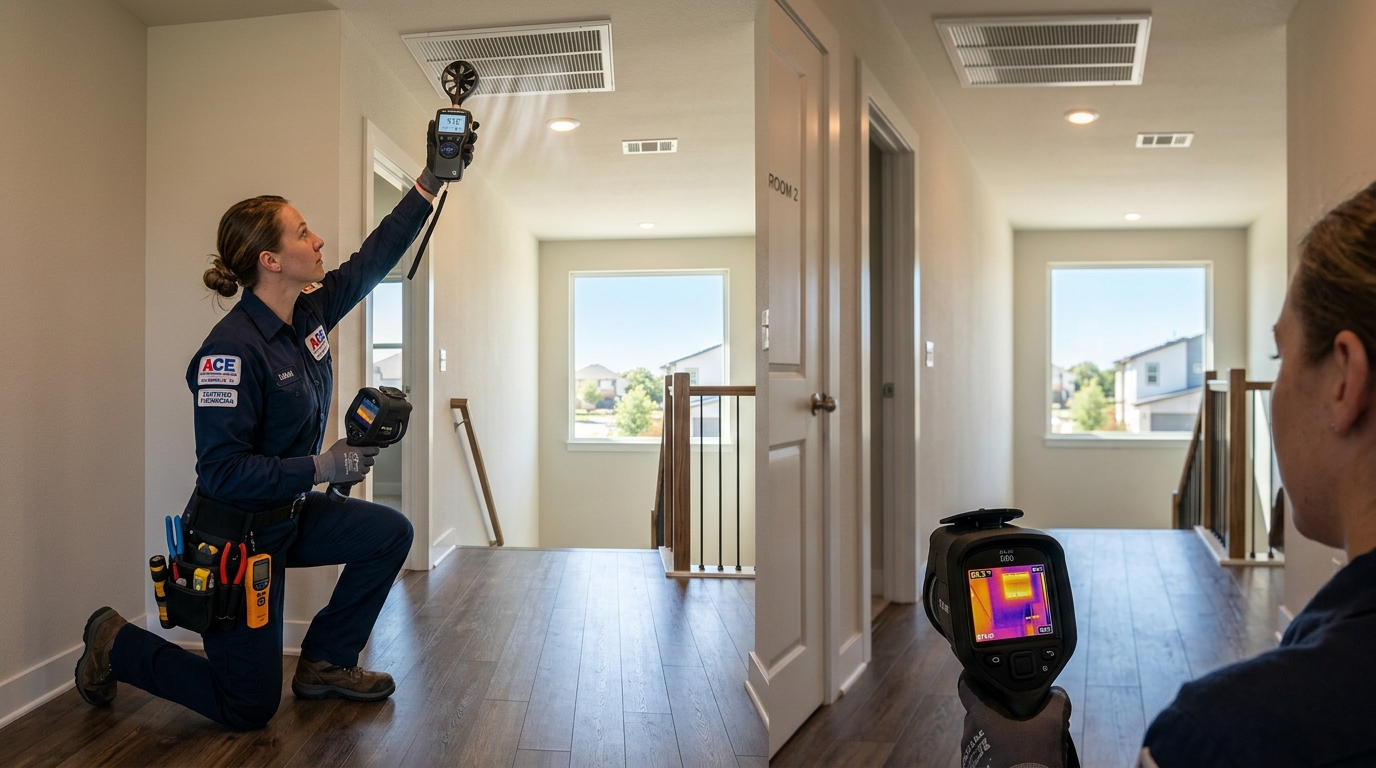
Diagnostic evaluation and precision measurement of heating and cooling components.
The Long-Term Repair & Safety Cost of Neglected Home HVAC Maintenance
Unplanned air conditioning and furnace failures during extreme weather spikes disrupt household comfort, trigger emergency callouts, and cut equipment operating lifespan in half. Homeowners executing scheduled bi-annual maintenance reduce sudden emergency breakdown risks by up to eighty percent.
A sudden compressor failure during a triple-digit heatwave forces homeowners to endure dangerous indoor temperatures while waiting for replacement components. Simple preventative steps avoid high-cost motor burnouts.
Most HVAC equipment manufacturers require documented annual maintenance to validate active warranty coverage on compressors and heat exchangers. Keeping detailed maintenance logs protects your equipment investment.
Comprehensive 10-Point Residential HVAC Inspection Checklist
Certified residential HVAC technicians follow a standardized ten-point testing sequence designed to evaluate electrical, mechanical, and airflow systems systematically. Technicians record multimeter readings, refrigerant subcooling, and temperature splits on digital service reports during every home visit.
Point 1: Calibrated microfarad testing of dual run capacitors against factory label specifications, replacing units exhibiting over six percent capacitance drift.
Point 2: Chemical washdown of outdoor condenser coils using low-pressure alkaline detergent to remove lawn clippings, dirt films, and cottonwood debris.
Point 3: Inspection of compressor contactor contact points, checking for electrical arcing, carbon pitting, and insect debris obstruction.
Point 4: Ultrasonic leak detection and digital subcooling calculations to certify proper factory refrigerant charge levels without gas loss.
Point 5: High-pressure nitrogen clearing of condensate drain lines and primary p-traps, followed by treatment with slow-release drain pan enzyme tablets.
Point 6: Testing emergency condensate float switches and secondary pan safety sensors to prevent ceiling drywall water damage.
Point 7: Static pressure differential testing across indoor air filter banks to verify balanced 400 CFM per ton airflow across the evaporator coil.
Point 8: Tightening all electrical lugs, wire disconnects, and thermostat communication terminals to eliminate high-resistance thermal hotspots.
Point 9: Optical fiber-optic heat exchanger inspection on gas furnaces to detect microscopic stress hairline cracks before carbon monoxide leaks develop.
Point 10: Digital combustion analysis and manifold gas pressure calibration, certifying optimal 3.5 inches water column manifold operation on natural gas.
Airflow Balancing & Static Pressure Diagnostics
Proper airflow across residential evaporator coils is essential for preventing compressor slugging and frozen refrigerant lines. National comfort standards require approximately four hundred cubic feet per minute of airflow per ton of nominal cooling capacity.
High external static pressure exceeding 0.7 inches water column causes indoor blower motors to draw excessive electrical current, leading to premature thermal winding burnout.
Technicians measure total external static pressure using dual-port digital manometers, drilling test ports into supply and return air plenums before and after filter racks.
Addressing ductwork restrictions, duct leaks, and oversized air filters restores balanced airflow and lowers household monthly utility bills.
Residential HVAC Operational Diagnostic Benchmarks
Review the standard diagnostic operating parameters compiled below to evaluate split system cooling performance under standard summer ambient heat conditions.
The operational diagnostic benchmarks compiled below allow homeowners to evaluate residential split system performance during seasonal maintenance calls.
| Equipment Capacity | Target Subcooling (TXV) | Target Superheat (Piston) | Blower Motor Current | Supply Delta-T Split |
|---|---|---|---|---|
| 2.5-Ton Split System | 10°F - 12°F | 12°F - 15°F | 2.8 - 3.4 Amps | 18°F - 21°F Split |
| 3.0-Ton Split System | 10°F - 13°F | 10°F - 14°F | 3.2 - 4.1 Amps | 17°F - 21°F Split |
| 4.0-Ton Split System | 11°F - 14°F | 9°F - 13°F | 4.5 - 5.8 Amps | 18°F - 22°F Split |
| 5.0-Ton Split System | 11°F - 15°F | 8°F - 12°F | 5.6 - 7.2 Amps | 16°F - 20°F Split |
Condensate Management & Attic Drain Safety Standards
Central air conditioners remove gallons of moisture daily from indoor household air that must drain safely outside the residential structure. Clogged drain lines and uninsulated secondary drain pans represent the primary cause of emergency indoor ceiling collapses during humid summer months.
Technicians inspect primary condensate lines for proper quarter-inch per foot downward slope and verify clean accessible cleanout tee caps.
Testing electronic secondary float switches ensures that power to the outdoor condenser cuts off instantly if the primary drain line becomes blocked.
Annual nitrogen line flushes remove accumulated zoogleal slime and algae colonies before drain line blockages can overflow interior drywall.
Frequently Asked Questions About Residential HVAC Preventive Maintenance Guide
Review common diagnostic questions and field answers regarding Residential HVAC Preventive Maintenance Guide. Consult certified HVAC professionals when performing electrical or thermodynamic testing on residential home cooling equipment.
How Often Should Residential Central HVAC Systems Be Serviced?
Residential heating and cooling systems should be professionally serviced twice per year: once in spring for the cooling equipment and once in autumn for the heating equipment. Regular bi-annual maintenance prevents sudden breakdown crises during peak seasonal weather extremes.
What Happens If You Skip Annual AC Maintenance?
Skipping annual maintenance leads to restricted coil airflow, dirt-insulated heat transfer surfaces, degraded run capacitors, and clogged condensate drains. Over time, unaddressed wear causes expensive compressor burnouts, elevated electric bills, and voided manufacturer warranties.
Can Homeowners Perform HVAC Maintenance Themselves?
Homeowners can safely replace air filters monthly, clear exterior foliage away from outdoor condensers, and rinse accessible drain lines. Complex tasks like multimeter capacitor testing, subcooling refrigerant evaluation, electrical contactor replacement, and heat exchanger inspections require certified technicians.
Need an Emergency HVAC Technician On-Site?
Our licensed 24/7 emergency technician referral network connects homeowners with independent contractors carrying factory-authorized universal parts to diagnose and restore residential heating and cooling promptly. Technicians verify safety controls and confirm local arrival times directly upon contact.