National HVAC Repair Cost Guide
National residential HVAC emergency repairs generally range between $140 and $850 for common mechanical components according to trade industry cost benchmarks. Actual repair costs vary significantly based on equipment age, refrigerant type, after-hours timing, and local contractor labor rates.
Understanding typical equipment repair expenses helps residential homeowners evaluate service recommendations objectively during high-stress heating or cooling breakdowns.
Local mechanical contractors determine exact repair quotes only after conducting physical electrical testing, manifold pressure evaluations, and airflow diagnostic checks on-site.
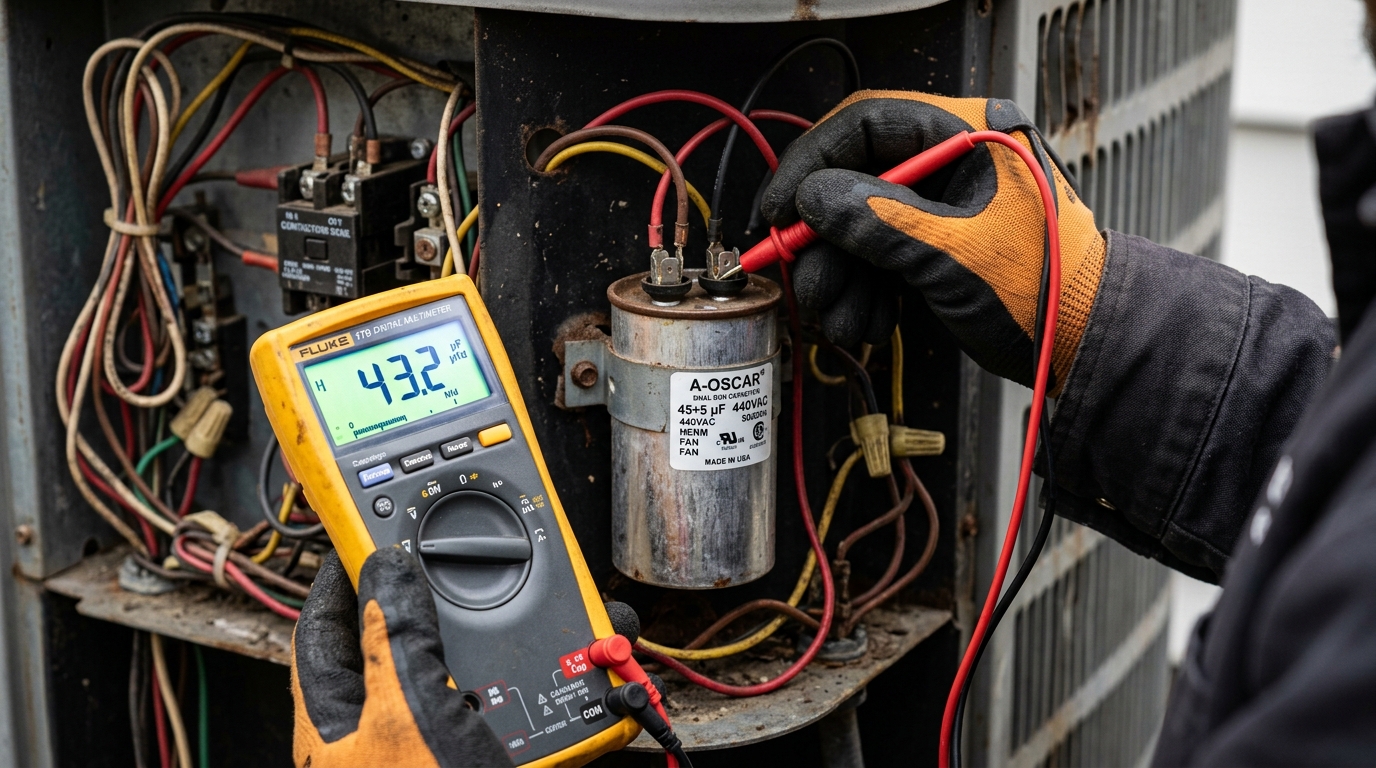
Certified HVAC technicians conduct diagnostic testing and rapid component restoration on all heating and cooling systems.
National Component Replacement Cost Benchmarks
Independent trade survey benchmarks indicate that standard electrical components like capacitors and contactors represent the most frequent and economical emergency repairs. Complex refrigeration and motor repairs require specialized equipment and carry higher national labor and material cost ranges.
The following reference table presents general national market averages for common residential heating and cooling repair procedures across single-family homes.
| HVAC Repair Component | National Benchmark Cost Range | Primary Cost Variables | Standard Replacement Scope |
|---|---|---|---|
| Diagnostic Evaluation Fee | $75 to $200 (National Average) | Travel distance, after-hours timing | Multimeter testing, manifold check |
| Dual Run Capacitor (440V) | $140 to $280 | Microfarad rating, brand tier | Terminal discharge, bracket mount |
| Compressor Contactor / Relay | $120 to $240 | Single-pole vs two-pole, amp rating | High-voltage wiring termination |
| Condensate P-Trap Nitrogen Flush | $95 to $260 | Attic accessibility, line length | Nitrogen purge, pan tablet treatment |
| Hot Surface Silicon Nitride Ignitor | $150 to $290 | Furnace brand, universal vs OEM | Ohm resistance test, bracket mount |
| Flame Sensor Cleaning & Rod Swap | $95 to $180 | Oxidation severity, sensor access | Emery cloth polish, microamp test |
| Thermal Expansion Valve (TXV) | $380 to $650 | Refrigerant recovery, line brazing | Deep vacuum, subcooling calibration |
| ECM Variable-Speed Blower Motor | $450 to $850 | Programmed module, horsepower | Wheel balancing, static pressure check |
| Furnace Draft Inducer Fan Assembly | $380 to $680 | PSC vs ECM inducer, housing style | Flue vent seal, pressure switch test |
| Reversing Valve & Solenoid Assembly | $450 to $850 | 4-way valve braze, refrigerant reclaim | Triple vacuum evacuation, weigh charge |
Figures reflect national historical ranges for standard residential split systems and heat pumps. Individual quotes vary based on regional supply house availability.
Diagnostic Fee Structures & Contractor Billing Models
Residential HVAC service providers utilize standardized diagnostic call charges to cover technician travel, vehicle fuel expenses, and on-site electrical instrumentation testing. Understanding contractor billing practices enables homeowners to anticipate preliminary evaluation expenses during emergency cooling and heating service dispatches.
Diagnostic fees compensate contractors for deploying certified personnel and rolling warehouse inventory directly to residential properties during equipment emergencies.
Technicians execute systematic safety assessments, measuring line voltages, manifold pressures, and combustion efficiency before compiling written repair quotes for property owners.
Standard Diagnostic Call vs Emergency After-Hours Rates
Routine daytime diagnostic service visits across the United States typically average between $75 and $150 based on regional economic conditions and urban transit distances. Weekend calls, holiday dispatches, and sub-zero winter freeze responses generally command higher emergency rates averaging between $150 and $250.
Overtime labor rates reflect the operational overhead of maintaining 24/7 on-call technician rotations and emergency wholesale parts distribution access outside standard business hours.
Contractor Diagnostic Crediting Policies Explained
Some independent heating and air conditioning contractors offer diagnostic fee offsets toward physical repairs when homeowners authorize component replacements during initial service visits. However, crediting policies are established independently by local service providers and are never standardized or guaranteed across referral platforms.
Homeowners should inquire about individual fee policies when scheduling appointments, confirming whether diagnostic charges remain standalone or offset physical mechanical labor.
Refrigerant Leak Repair & System Recharge Economics
Refrigerant repair costs represent some of the most variable residential HVAC expenses due to EPA Section 608 recovery mandates and evolving refrigerant production quotas. Locating microscopic coil leaks, brazing copper joints, and recharging virgin refrigerant requires specialized recovery machines, digital scales, and vacuum pumps.
Simply adding refrigerant without locating and repairing mechanical leaks violates federal environmental regulations and leads to recurring cooling failures within weeks.
Professional contractors utilize heated diode halogen sniffers and ultrasonic acoustic sensors to pinpoint leak locations along indoor evaporator coils and outdoor line sets.
Electronic Leak Detection & Nitrogen Decay Pressure Testing
Comprehensive electronic leak detection services typically average between $200 and $450 depending on whether evaporator coils require immersion bubble testing or ultraviolet dye injection. Isolate-and-test procedures using pressurized dry nitrogen verify line set integrity before expensive virgin refrigerant charging commences.
Nitrogen pressure testing holding at 350 PSI for thirty minutes proves joint hermeticity, ensuring expensive refrigerant does not leak into domestic living spaces.
R-410A vs Next-Generation R-32 Refrigerant Pricing Trends
Legacy R-410A refrigerant prices have increased significantly following AIM Act production phase-down schedules, averaging between $50 and $120 per pound installed. Modern systems utilizing mildly flammable A2L refrigerants such as R-32 require spark-proof recovery machines and digital scales during recharge procedures.
A complete residential recharge for a typical three-ton central air conditioner requiring seven pounds of refrigerant can range between $350 and $800 in materials alone.
Major Component Repair vs Full System Replacement Economics
When residential heating and cooling equipment experiences catastrophic failures like hermetic compressor burnout or cracked heat exchangers, homeowners face critical financial choices between costly component replacement and complete system modernization. Analyzing equipment age, efficiency ratings, and long-term operating costs informs sound domestic investment decisions.
Replacing a compressor on an older system can cost between $1,200 and $2,400, approaching half the cost of installing a new high-efficiency outdoor condenser.
Technicians provide objective assessments of overall equipment condition, evaluating indoor coil cleanliness, ductwork static pressure, and electrical wiring condition.
The Industry Standard 5,000 Rule for HVAC Equipment Life
The ACCA 5,000 Rule provides an empirical guideline for evaluating repair feasibility by multiplying equipment age in years by estimated repair costs in dollars. If the product exceeds 5,000, mechanical engineering consensus recommends full equipment replacement rather than sinking capital into aged machinery.
For example, an eight-year-old air conditioner facing an $800 repair produces a score of 6,400, suggesting replacement is more economical over a three-year horizon.
Manufacturer Parts Warranty Verification & Registration
Most residential HVAC manufacturers provide five to ten-year limited parts warranties on compressors, coils, and functional mechanical parts when equipment is registered promptly after installation. Independent technicians can verify warranty coverage through manufacturer serial number databases before ordering replacement assemblies from regional distributors.
While factory warranties cover physical component costs, homeowners remain responsible for contractor diagnostic fees, refrigerant recovery charges, and labor hours.
Frequently Asked Questions About HVAC Repair Costs
Review practical answers to common homeowner inquiries regarding emergency repair expenses, diagnostic fees, after-hours rates, and contractor billing protocols. Understanding trade standards helps consumers make informed decisions during sudden residential heating and air conditioning failures.
National trade benchmarks indicate standard diagnostic evaluation fees range between $75 and $200 depending on region, travel distance, and after-hours timing. Actual repairs are quoted separately by contractors.
After-hours calls require overtime compensation for certified technicians and specialized parts access outside standard wholesale supply house hours during severe temperature extremes.
Some independent contractors apply diagnostic fees toward approved repairs while others bill diagnostics as a separate inspection fee. Homeowners should verify fee policies directly with local technicians.
HVAC industry guidelines suggest replacement when the repair cost multiplied by system age exceeds $5,000, or when equipment exceeds twelve years of age and requires major compressor repairs.
Need an Emergency HVAC Repair Diagnosis?
Connect with our independent 24/7 emergency heating and air conditioning contractor referral network to check local technician availability in your municipal area. Independent contractors provide on-site technical diagnostics and written estimates before commencing mechanical repairs.
Call (855) 716-3231 to Check Local Technician Availability Enter your 5-digit ZIP code when prompted for instant local dispatch.