3 Regional Climate Demands & Soil Geology Stressors on HVAC Units
Heating and air conditioning systems across Arvada endure extreme environmental strain triggered by Denver metro Front Range elevation pressure drops, dry summer heat, and sub-zero winter wind chills. These intense microclimates accelerate dual run capacitor oil breakdown, corrode outdoor contactors, and stress refrigerant piping.
Operating split systems or heat pumps during severe local temperature extremes without adequate airflow static pressure results in rapid motor winding failure and frozen coils.
Local geological formations, including Expansive bentonite clay, decomposed granite, and rocky mountain colluvium, create substantial ground subsidence and seasonal earth movement.
This subsurface shifting frequently tilts exterior concrete equipment pads, pulling copper line sets out of alignment and stressing delicate factory braze joints.
Dominant construction typologies, including Mid-century brick ranches with full basements, split-level family residences, and modern suburban tracts, require balanced ductwork static pressures to avoid air starvation in secondary living zones.
Local transit corridors along Interstate 70, State Highway 121 Wadsworth Boulevard, and Ralston Road enable independent technicians to reach residential neighborhoods during peak seasonal weather fronts.
Certified technicians execute precision electrical testing, measure refrigerant subcooling, and guarantee compliance with Colorado State Mechanical Licensing & Municipal Building Authorities mandates.
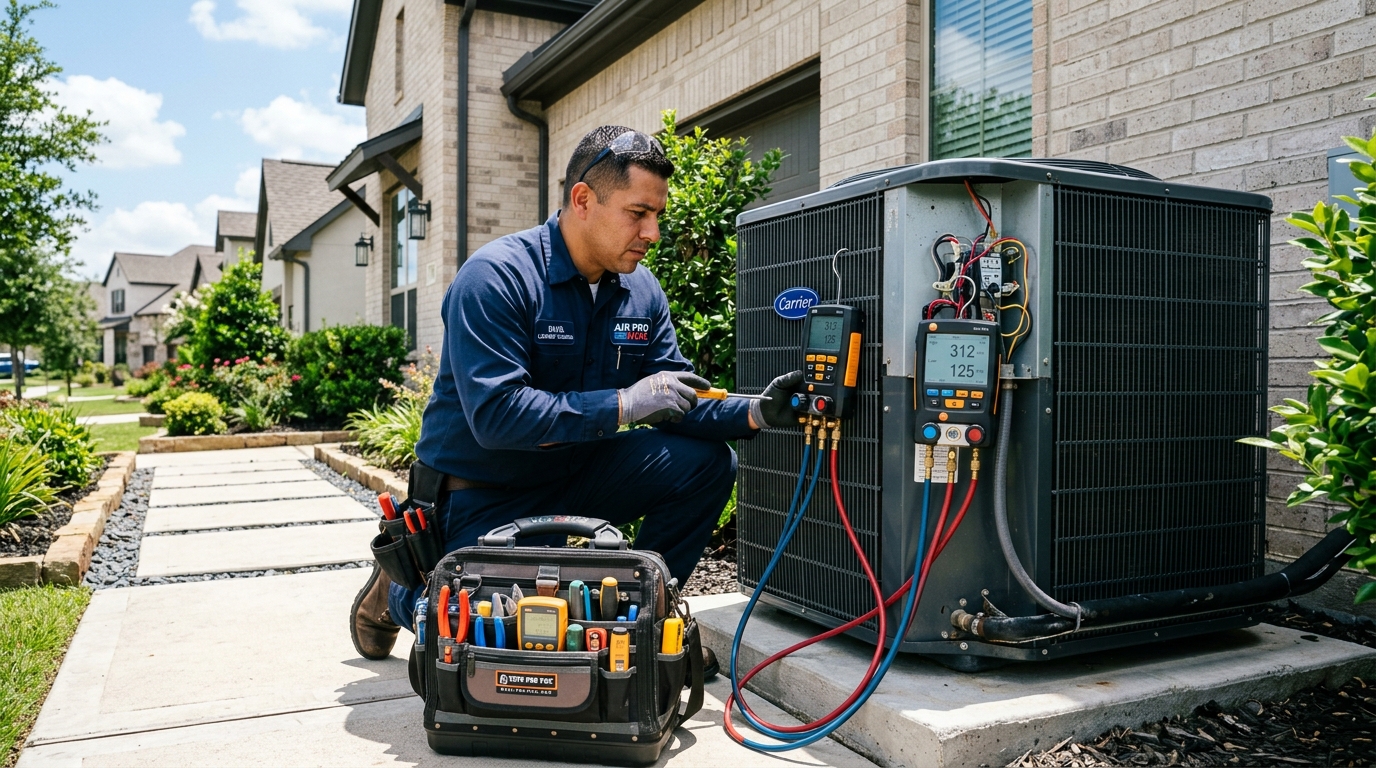
4 Standardized ANSI/ACCA & EPA Section 608 Diagnostic Protocols
Certified HVAC diagnostic and mechanical restoration procedures follow strict ANSI/ACCA standards and EPA Section 608 guidelines across regional households. Calibrated instrumentation isolates electrical faults, measures airflow volume, and verifies thermodynamic performance accurately.
- Digital Multimeter Hermetic Capacitance Testing: Calibrated microfarad testing across HERM, FAN, and Common terminals verifies whether run capacitors operate within 6% of nominal specifications.
- Electronic Refrigerant Leak Detection & Subcooling Analysis: High-precision electronic sniffers and digital manifold gauges measure liquid line pressure and temperature to pinpoint active R-410A leaks.
- Dual-Port Manometer Static Pressure Balancing: Technicians measure external static pressure across supply and return plenums to eliminate restricted airflow before motor damage occurs.
- Combustion Analysis & Optical Heat Exchanger Scoping: High-resolution optical boroscopes inspect heat exchangers to identify cracks and safeguard households against dangerous carbon monoxide hazards before furnace reactivation.
3 Regional Environmental HVAC Emergency Dispatch Corridors in Colorado
Our emergency HVAC dispatch fleet coordinates 24/7 rapid response and mechanical stabilization across all municipal sectors in Colorado. Certified technicians deploy promptly based on local technician availability, maintaining synchronized communications with regional rapid response stations.
During severe summer heatwaves, field crews coordinate certified Denver emergency AC repair protocols.
Similarly, home heat pumps facing sudden reversing valve failures rely on our Aurora heat pump specialists.
Because dual run capacitor failures surge during peak thermal events, technicians partner with Boulder heating and cooling teams.
We also execute gas valve calibrations and combustion safety tests backed by our Evergreen furnace repair units.
Whether correcting refrigerant leaks or clearing clogged drain lines, our Golden HVAC technician fleet provides immediate help.
This coverage is reinforced through our Littleton field station and nearby response specialists.
Interactive HVAC Cooling Load & Airflow (CFM) Static Pressure Calculator
Use our engineering diagnostic calculator to estimate required air conditioning tonnage, target airflow cubic feet per minute, and return duct static pressure friction. Sizing ductwork properly prevents blower motor overheating, frozen evaporator coils, and catastrophic compressor failure.
Return air velocity exceeds 1,000 FPM. This severe duct constriction starves the evaporator coil, creating high risk of frozen refrigerant lines and premature blower motor burnout. Emergency static pressure testing recommended.
Frequently Asked Emergency HVAC Questions
Property owners and tenants in Arvada frequently inquire about technician response windows, capacitor failures, landlord habitability laws, and service pricing. The following technical answers clarify emergency HVAC restoration protocols under Colorado State Mechanical Licensing & Municipal Building Authorities rules.
How quickly can an emergency HVAC technician reach my property in Arvada, CO?
Emergency HVAC response times in Arvada, CO depend on local technician availability, regional transit corridors, and severe weather demand. Independent contractors navigate Interstate 70, State Highway 121 Wadsworth Boulevard, and Ralston Road carrying universal dual run capacitors, contactors, and fan motors to restore domestic.
Direct route coordination ensures rapid technician dispatch even during severe local storm events, peak summer heatwaves, or freezing winter cold snaps.
What causes an air conditioning compressor to hum without starting during peak summer heat?
An air conditioner that hums without starting during peak summer heat is typically crippled by a degraded dual run capacitor or seized compressor motor windings. Excessive attic heat and continuous electrical cycling cause dielectric fluid breakdown, preventing the compressor from reaching operating rotational speed.
Technicians use calibrated microfarad multimeters to confirm capacitor health before assessing compressor terminal windings for locked rotor conditions.
What are tenant and landlord habitability rights regarding emergency heating and cooling in Colorado?
Under Colorado Warranty of Habitability Act (C.R.S. § 38-12-503 Heating Emergency Provisions), property owners must maintain heating and mechanical cooling systems in safe operating condition. Landlords must initiate certified repairs promptly after written tenant notice when indoor temperatures exceed statutory habitability thresholds during severe.
Securing an official on-site diagnostic report documents mechanical failure causes, ensuring both parties have transparent verification of required system repairs.
What is the exact diagnostic fee and service call cost for emergency HVAC repair?
Emergency diagnostic service calls generally range between $75 and $200 according to prevailing regional market rates. Independent contractors provide itemized written quotes before physical repairs begin. Technicians perform comprehensive multi-point electrical testing before presenting written quotes on-site.
Property owners review transparent component costs and labor estimates on-site before physical repair tools touch the system, guaranteeing predictable billing.